
Member Login

Welcome back to LMPOA

Baja California - The beginning of time.

Modern Era – From Coastal Village to International Community (1979-Present)

The modern chapter of La Misión’s story begins not with conquest or revolution, but with celebration. In 1979, Professor Mario Ramon Reyes Melendez had a vision: he wanted the residents of La Misión to take pride in their community’s incredible history and cultural diversity. What started as his idea became Fiesta en La Misión—an annual celebration that would help transform a quiet coastal village into a community conscious of its remarkable heritage and exciting future.

The Birth of Fiesta en La Misión

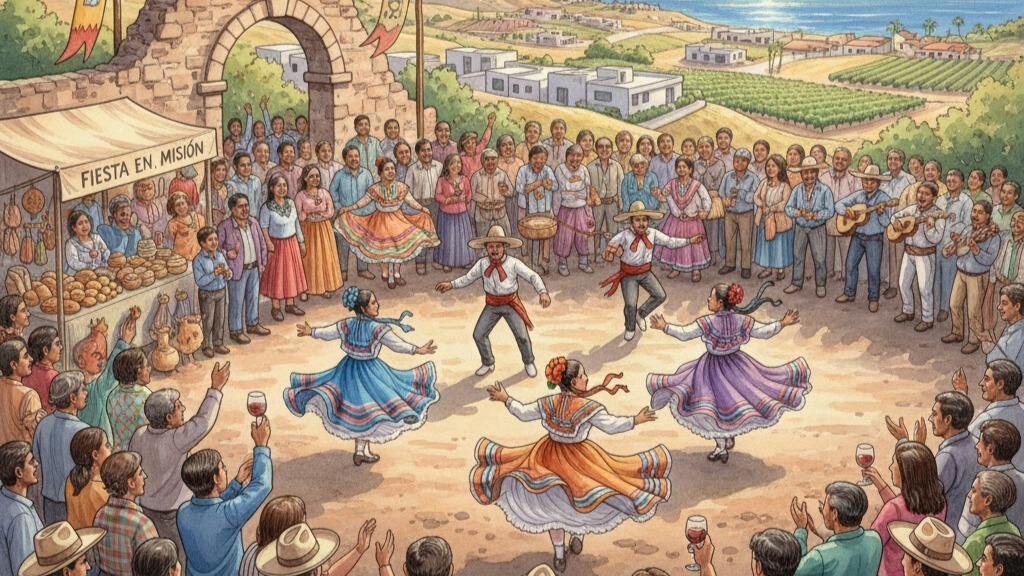
The first fiesta in 1979 welcomed several hundred locals with storytelling, dance, historical exhibits, and regional food. Professor Reyes understood something important: La Misión’s story—spanning millennia of Kumeyaay heritage, Spanish mission settlement, rancho traditions, and ejido cooperation—deserved to be celebrated and shared, not hidden or forgotten.

At the center of this celebration was something completely unique: the Baile Calabaceado, a lively folk dance that originated right here in La Misión from cowboy gatherings during the rancho period. This dance mimics animal movements in ways that always get people laughing and clapping along. What makes us especially proud is that La Misión is officially recognized as the birthplace of the Baile Calabaceado—when visitors see this dance, they’re witnessing something that can’t be experienced anywhere else in the world.

The fiesta quickly became more than entertainment. It became an annual ritual that brought multiple generations together, helped young people understand their heritage, and gave older residents a platform to share their stories and memories. Local artisans showcased traditional crafts. Regional gastronomy highlighted foods prepared here for generations. The celebration honored all the layers of La Misión’s identity—indigenous, Spanish, Mexican, and the unique synthesis that emerged from their interaction.

Today, held during the last weekend of May, Fiesta en La Misión attracts visitors from across Mexico and beyond. It’s grown from Professor Reyes’ modest beginning into one of the region’s most beloved cultural events—proof that celebrating your history can bring a community together and put it on the map.

The Wine Country Boom: Everything Changes

While Professor Reyes was helping La Misión appreciate its past, forces were at work that would transform its future. Starting in the 1980s and accelerating dramatically in the 2000s, Valle de Guadalupe—that agricultural valley about 30 minutes inland from La Misión—began its metamorphosis into Mexico’s premier wine region.

What was once primarily farmland producing table grapes, olives, and grain became home to boutique wineries creating world-class wines. Early pioneers like L.A. Cetto, Santo Tomás, and Monte Xanic proved that Valle de Guadalupe’s terroir—the combination of soil, climate, and geography—was perfect for wine grapes. The Mediterranean climate, moderated by Pacific Ocean breezes, the well-drained decomposed granite soils, and the elevation ranging from 1,000-1,250 feet created ideal conditions.

By the 2000s, Valle de Guadalupe was earning international recognition. Wine critics started comparing it favorably to Napa Valley. Innovative young winemakers were experimenting with techniques and grape varieties, creating distinctive Baja California wines. The “Baja Mediterranean” cuisine emerged—a fusion of Mexican ingredients, Mediterranean techniques, and Asian influences that paired perfectly with the wines.

Today, Valle de Guadalupe boasts approximately 150 wineries producing 70% of all Mexican wines. It attracts food and wine tourists from around the world. It’s been featured in international publications, documentaries, and travel shows. And crucially for La Misión, it made our community’s designation as the “southern gateway to wine country” incredibly valuable.

La Misión as the Gateway

Suddenly, La Misión’s strategic location became a major asset. Visitors driving down from San Diego to explore Valle de Guadalupe passed right through our community. That beautiful stretch of coast at Playa La Misión became a perfect spot to stay—enjoy wine tasting during the day, then return to the beach for sunset and the sound of waves.

This created opportunities but also challenges. Property values began rising as people recognized La Misión’s potential. International buyers—particularly from Southern California—became interested in beachfront properties and hillside lots with views. The quiet coastal village was being discovered.

Residential Development: Playa and Loma

The 1990s and 2000s saw the development of two distinct residential areas that would define modern La Misión:

Playa La Misión remained relatively modest in development, maintaining much of its authentic Baja beach town character. Properties here range from simple beach houses to larger family homes, with a mix of Mexican nationals and international owners. The beachfront stayed delightfully undeveloped—no high-rise condos, no major resorts, just that beautiful 2.5-kilometer stretch of sand with local palapas and restaurants.

Loma La Misión represented a different vision. Hillside development with gated security, paved roads, utilities, and properties offering spectacular ocean, mountain, and estuary views. This appealed particularly to international buyers and investors seeking the security and amenities they were accustomed to, but in a Mexican coastal setting with lower costs than Southern California.

Both developments benefited from the 1992 ejido reforms that allowed communal land to be privatized and sold. Former ejidatario families made difficult decisions about whether to sell land their grandparents had fought for, or to hold onto it while watching property values soar around them. Some sold and used the proceeds to start businesses or invest in education for their children. Others held on, maintaining their connection to land their families had worked for generations.

The Property Owners Association Emerges

As these residential developments grew, the need for community organization became clear. Property owners needed to coordinate on issues like security, road maintenance, utilities, and representation in dealing with local government. This led to the formation of the La Misión Property Owners Association (LMPOA).

LMPOA emerged to serve a community of approximately 150 property owners—a diverse group including full-time residents, part-time snowbirds escaping northern winters, weekend visitors from Southern California, and investors with rental properties. The community was bilingual from the start, with both English and Spanish speakers, reflecting the international character of modern La Misión.

The association established a governance structure with board members elected to handle community business, manage common concerns, and represent property owner interests. This created a formal organization that could negotiate with developers, coordinate with local government, organize community events, and provide services that individual property owners couldn’t manage alone.

Today, LMPOA continues this role, managing everything from security coordination to community communications, from website and documentation to planning social events that bring our diverse community together.

The Cross-Border Lifestyle

One of the most distinctive features of modern La Misión is its cross-border character. Many property owners maintain homes or connections in both Mexico and the United States, living what might be called a “bi-national lifestyle.”

This isn’t entirely new—cross-border connections have existed since the border was drawn in 1848. But modern transportation, telecommunications, and relatively open border policies (at least until recent years) have made it easier than ever to maintain meaningful connections on both sides.

La Misión residents might shop at Costco in San Diego, see doctors in the U.S., and handle business remotely from their beach houses—then enjoy Mexican food, wine country tours, and lower costs of living. Retirees find they can stretch Social Security or pension income much further in Mexico while staying close enough to family in the U.S. for regular visits.

This creates a unique community identity. We’re not fully Mexican or American—we’re something hybrid, participating in both cultures, benefiting from both systems, and sometimes caught in tensions between them. Border wait times, currency fluctuations, changes in visa regulations, and shifting political winds affect us directly.

Challenges of Growth and Change

Modern La Misión faces challenges that earlier generations didn’t have to consider:

Development Pressure: As property values rise and international interest grows, there’s constant pressure for more development. How much development is too much? How do we preserve the undeveloped character that makes La Misión attractive while allowing property owners to benefit from rising values?

Infrastructure Strain: Roads, water systems, and utilities built for a smaller population are stressed by growth. Who pays for upgrades—existing residents or new developments? How do we maintain services without losing the affordable, low-key character that drew people here?

Cultural Tensions: Long-time local residents sometimes feel displaced by international newcomers who don’t speak Spanish, don’t understand local customs, and drive up property values and rents. How do we build bridges between different groups rather than walls?

Environmental Concerns: Coastal development affects the estuary ecosystem, groundwater supplies, and ocean water quality. How do we balance property rights with environmental protection? How do we ensure the natural beauty that attracted us remains for future generations?

Security Questions: Property crime, drug violence in broader Baja California, and concerns about personal safety affect how people think about living here. Gated communities provide security but also segregation. What’s the right balance?

Economic Inequality: The gap between property owners in gated communities and working-class families in the ejido village is stark and growing. This creates social tensions and raises questions about who benefits from La Misión’s development and who bears its costs.

What Makes Modern La Misión Special

Despite these challenges—or perhaps because of them—modern La Misión has developed a distinctive character that residents treasure:

Community Despite Diversity: We’re a community that shouldn’t work on paper—different nationalities, languages, economic situations, and reasons for being here. Yet somehow it does work, at least most of the time. Fiesta en La Misión brings everyone together. The LMPOA provides a forum for collective problem-solving. Neighbors help each other despite language barriers.

Natural Beauty Preserved: Unlike many coastal areas in California or mainland Mexico, Playa La Misión remains largely undeveloped. The estuary continues to attract migratory birds. The surf breaks are uncrowded. You can still walk the beach for miles without encountering high-rises or mass tourism.

Wine Country Access: Being the gateway to Valle de Guadalupe means we have world-class food and wine experiences a short drive away, without living in the middle of tourist crowds. It’s the perfect balance of accessibility and tranquility.

Authentic Mexican Culture: Despite international residents, La Misión maintains strong Mexican cultural identity. The ejido village keeps traditions alive. Local businesses serve regional cuisine. Spanish remains the dominant language in most of the community. We’re not living in an American enclave—we’re participating in Mexican culture.

Active Outdoor Lifestyle: The combination of beach, hills, and moderate climate supports year-round outdoor activities. Surfing, hiking, horseback riding, beach walking, kayaking, cycling—you can do all of this without driving anywhere. The pandemic taught many of us how valuable this is.

Strategic Location: We’re close enough to San Diego for convenience but far enough to feel like an escape. We’re near enough to Rosarito and Ensenada for services and entertainment but removed enough to avoid their crowds. This Goldilocks positioning—not too isolated, not too urban—is rare and precious.

Technology Transforms the Community

One development that deserves special mention is the arrival of reliable high-speed internet in recent years. Fiber optic connections in many Loma La Misión developments have made remote work feasible in ways it wasn’t even a decade ago.

This changed who could live here. Previously, La Misión was primarily retirees, vacation home owners, and people whose work didn’t require constant connectivity. Now remote workers, digital nomads, and people running online businesses can live here full-time while maintaining careers that would have required living in major cities.

The COVID-19 pandemic accelerated this trend dramatically. When offices closed and remote work became standard, many people asked themselves: “If I can work from anywhere, why not work from somewhere beautiful?” La Misión benefited from this thinking, seeing an influx of younger residents who might not have considered it before the pandemic.

This brings both opportunities and challenges. More full-time residents strengthen the community and support local businesses. But rapid growth strains infrastructure and changes community character in ways that long-time residents don’t always welcome.

Environmental Awareness and Protection

Modern La Misión has seen growing awareness of environmental protection. The Río Guadalupe estuary is increasingly recognized as an ecological treasure that needs protection. Community members organize beach cleanups. There’s growing discussion about sustainable water use, proper waste management, and protecting the marine environment.

This represents a positive development, though there’s still work to do. Development inevitably impacts the environment—every septic system, every lawn requiring irrigation, every road cutting through habitat has consequences. But there’s growing recognition that we need to balance development with preservation, that the natural beauty attracting us here needs active protection to survive.

Some property owners are installing solar panels, harvesting rainwater, and using drought-tolerant landscaping. Others advocate for stricter building codes to protect views and environmental quality. These efforts don’t always succeed against economic pressures, but the conversation is happening in ways it wasn’t a generation ago.

Looking Forward: What Kind of Community Will We Become?

Modern La Misión stands at a crossroads. The choices we make now—about development, community character, environmental protection, and relationships between different groups—will shape what this place becomes for the next generation.

Will we preserve the undeveloped character that makes La Misión special, or will development pressure gradually transform us into another resort area? Will we build bridges between long-time local residents and newer international property owners, or will we become a segregated community of parallel worlds that don’t interact? Will we protect the environmental qualities that define this place, or will we allow degradation for short-term profit?

These aren’t easy questions, and reasonable people disagree about the answers. But having the conversation—involving all parts of our diverse community in thinking about our shared future—is essential.

The COVID Era and Beyond

The COVID-19 pandemic of 2020-2021 affected La Misión in complex ways. Border closures made cross-border living difficult. Some property owners found themselves stuck on one side of the border or the other for extended periods. The Fiesta en La Misión was cancelled in 2020, breaking a 40-year tradition.

But the pandemic also brought opportunities. Remote workers discovered La Misión. Property values increased as people sought less dense living situations. The community rallied to support local businesses struggling with reduced tourism. We learned we could maintain community connections even when in-person gatherings weren’t possible.

As we emerge from the pandemic era, La Misión faces a new normal. Remote work is now permanently accepted by many employers, opening La Misión to people who couldn’t have lived here before. The experience of border restrictions reminded us how dependent our community is on open borders and stable U.S.-Mexico relations. The support networks built during the pandemic showed what our community can accomplish when we work together.

What We’ve Learned from Our History

Looking back over La Misión’s entire history—from geological formation through Kumeyaay stewardship, mission settlement, rancho traditions, ejido cooperation, and into our modern international community—several themes emerge:

Place Matters: Something about this particular combination of coast, river, valley, and hills has drawn people here across thousands of years. The geology created the landscape. The landscape shaped human choices. Those choices created communities that enhanced the reasons to be here. It’s a positive feedback loop that continues today.

Change is Constant: Every generation thinks their version of La Misión is the “real” one, but every generation has experienced profound change. The Kumeyaay adapted to climate changes over millennia. The mission period transformed everything in less than a century. The ejido system lasted about 60 years before transformation. We’re living through another period of rapid change, but we’re not the first.

Diversity is Strength: La Misión has always been multicultural. Kumeyaay bands with different dialects. Spanish and indigenous mixing during the mission period. Mexican nationals and Americans during the rancho era. Today’s international community continues this pattern. Our diversity creates tensions but also richness.

Community Requires Effort: The strongest periods in La Misión’s history have been when people worked together—Kumeyaay seasonal cooperation, mission community building (however flawed), ejido collective governance, and modern community organizations like LMPOA. Community doesn’t happen automatically; it requires intentional effort.

Respect the Past, Build the Future: Professor Reyes understood that celebrating history isn’t about living in the past—it’s about carrying forward the best of what came before while creating something new. The Fiesta en La Misión honors ancient traditions while bringing contemporary community together. We can do the same.

Your Part in the Story

If you’re reading this, you’re part of La Misión’s modern chapter. Whether you’re a long-time resident whose family lived through the ejido era, a recent property owner attracted by wine country and beaches, a renter enjoying the lifestyle temporarily, or someone considering joining our community—you’re part of the ongoing story.

What kind of neighbor will you be? Will you learn some Spanish if you don’t speak it? Will you attend Fiesta en La Misión and appreciate its historical significance? Will you support local businesses in the ejido village? Will you participate in LMPOA governance? Will you respect the environmental qualities that make this place special?

These aren’t rhetorical questions. La Misión’s future depends on the daily choices of everyone who calls it home. We’re writing the next chapter together, whether we realize it or not.

Celebrating Where We Are

Despite challenges, modern La Misión has much to celebrate. We live in a place of extraordinary natural beauty with thousands of years of human history. We’re part of an emerging international community that’s learning to bridge cultural differences. We have access to world-class wine country, beautiful beaches, and outdoor recreation. We’re close enough to major cities for convenience but removed enough for tranquility.

We benefit from the struggles and sacrifices of everyone who came before—the Kumeyaay who managed this land for millennia, the mission community that survived in harsh frontier conditions, the rancho families who built lasting connections to place, the ejidatarios who fought for land rights and built community infrastructure, and the pioneers of the modern era who had the vision to recognize La Misión’s potential.

The Fiesta en La Misión every May isn’t just about history—it’s about recognizing that we’re all part of a continuing story. When we dance the Baile Calabaceado, we’re connecting to rancho vaqueros. When we walk the mission ruins, we’re connecting to Spanish and Kumeyaay ancestors. When we participate in LMPOA governance, we’re echoing ejido assemblies. When we gather as neighbors despite our differences, we’re continuing a tradition of community building that spans thousands of years.

An Invitation to Participate

Modern La Misión needs active, engaged community members. Attend LMPOA meetings. Volunteer for beach cleanups. Support the Fiesta en La Misión. Get to know your neighbors, especially those whose backgrounds differ from yours. Learn about the area’s history and share it with visitors. Advocate for balanced development that preserves what makes La Misión special while allowing appropriate growth.

If you’re not yet part of our community but are considering it, come visit. Walk the beach. Explore the mission ruins. Attend the fiesta in May. Talk to residents—both long-time locals and recent arrivals. Tour the wine country. Spend time getting to know the place before deciding if it’s right for you.

La Misión isn’t for everyone. If you want resort amenities, nightlife, or urban entertainment, you’ll be disappointed. If you need everything to be like “back home” in the U.S., you’ll be frustrated. If you’re not comfortable with some ambiguity, occasional inefficiency, and cultural difference, this might not be your place.

But if you value natural beauty, authentic culture, genuine community, outdoor activities, and the adventure of cross-border living—if you appreciate a place with deep history and exciting future—if you want to be part of something real rather than a manufactured tourist experience—then La Misión might be exactly what you’re looking for.

The Story Continues

Professor Reyes started something important in 1979 when he organized that first Fiesta en La Misión. He helped a community recognize its own remarkable story and take pride in its layered heritage. That consciousness of history—of being part of something larger and longer than ourselves—helps us make better choices about the future.

As we face questions about development, community character, environmental protection, and relationships between different groups, we can draw on thousands of years of La Misión’s history. We can learn from the Kumeyaay’s sustainable land management. We can remember the mission period’s lessons about cultural collision and adaptation. We can consider the rancho era’s emphasis on long-term family connection to place. We can apply the ejido system’s insights about community cooperation and democratic governance.

The modern era of La Misión is just beginning. Valle de Guadalupe’s wine industry continues growing, bringing more visitors to our gateway community. Climate change will affect our weather patterns and water supplies. Political changes in Mexico and the United States will impact our cross-border lifestyle. New technologies will create opportunities we can’t yet imagine. The next generation will make choices that seem as radical to us as our choices might seem to ejido-era residents.

But if we maintain the commitment to community, respect for history, and appreciation for this special place that has characterized La Misión throughout its long story, then the future—whatever it brings—will continue the remarkable saga that began millions of years ago when tectonic plates started ripping Baja California away from mainland Mexico.

Welcome to La Misión. Your chapter in this ancient story is just beginning. Make it a good one.