
The History of La Misión Valley: A Journey Through Time

Standing at Playa La Misión today, watching waves roll in from the Pacific while the Río Guadalupe meets the sea, you’re experiencing more than just beautiful scenery—you’re standing on one of the most geologically and culturally fascinating places in North America. The story of La Misión stretches back not just centuries, but millions of years, and every layer of that history has shaped the remarkable place we call home today.

When Continents Collide: The Geological Birth of Baja

Our story begins in deep time, when the land beneath your feet didn’t even exist as we know it. Between 100 and 80 million years ago, during the Cretaceous period, a subduction zone existed along the western edge of North America, where oceanic plates crashed into the continent, creating massive volcanic activity. This violent collision built the backbone of what would eventually become the Baja Peninsula—the Peninsular Range that forms our eastern horizon.

Then, 25 to 12 million years ago during the Miocene period, the Farallon Plate in the Pacific Ocean began subducting at a much steeper angle, creating more volcanoes whose volcanic rocks now make up many of the flat-topped mesas visible throughout Baja California. But the real drama was yet to come.

About 12 million years ago, something remarkable happened: the conveyor belt of subduction stopped, and a new geological phenomenon emerged called oblique rifting. This created the Gulf of California Shear Zone, which connected with the southern end of the San Andreas fault near the Salton Sea, causing everything west of it to begin ripping away from mainland Mexico and moving northwest.

Approximately 5 million years ago, this rifting and extension along the eastern edge of the Baja Peninsula caused it to separate from mainland Mexico, forming the Gulf of California. Baja California, as we know it—this slender peninsula stretching 775 miles from Tijuana to Cabo San Lucas—was born from this tectonic violence, created relatively quickly in geological terms.

What does this mean for La Misión? The area east of La Misión contains Mesozoic volcanic flow rock interbedded with tuff breccias, marine sandstone with layers of diatomaceous earth, and fossils including ammonites, gastropods, and even shark teeth from the Miocene period. Walking our hills and beaches, you’re literally traversing millions of years of Earth’s history, from ancient volcanic eruptions to times when this entire area lay beneath warm, shallow seas.

The Río Guadalupe that flows through our valley today carved its path over countless millennia, creating the fertile estuary that would prove irresistible to the first human inhabitants. The coastal terraces you see were once stream levels from tens of thousands of years ago, now elevated by ongoing tectonic uplift. Even today, the land beneath us continues its slow journey northwest along the Pacific Plate.

The First Stewards: 12,000 Years of Kumeyaay Heritage

Long before recorded history, before Spanish ships appeared on the horizon, before the mission bells rang—the Kumeyaay people made this land their home. Evidence suggests the Kumeyaay lived in this territory for at least 12,000 years, with settlement dating back twelve millennia. Think about that for a moment: while ancient civilizations were just beginning in Mesopotamia, the Kumeyaay were already thriving along these shores.

The Kumeyaay territory extended from present-day Oceanside, California, in the north to south of Ensenada, Mexico, and east to the Colorado River. La Misión fell within the lands of the Tiipai, the southern branch of the Kumeyaay who inhabited the Laguna Mountains, Ensenada, and Tecate regions. The term Kumeyaay translates as “Those who face the water from a cliff,” with meyaay meaning “steep” or “cliff”—a perfect description of our coastal landscape.

Masters of the Land

What’s truly remarkable about the Kumeyaay wasn’t just their longevity here—it was their sophisticated understanding of environmental management. The Kumeyaay adapted to changes in the environment and were able to plant and grow crops, creating a system that managed water in such a way that there was enough for growing grains. They built stone markers to track the movement of celestial bodies and constellations to know when solstices or equinoxes were approaching, using these markers to know when to plant and harvest their crops.

When Spanish explorers first saw the lush meadows in valleys east of what is now San Diego, they assumed they were gazing upon natural grasslands. They were looking at ancient grain fields—the product of some of North America’s earliest and most skilled environmental managers. The Kumeyaay weren’t just living off the land; they were actively shaping and improving it through controlled burning, irrigation management, and selective cultivation.

Their villages along our coast and in the Río Guadalupe valley utilized every resource the land provided. Kumeyaay women gathered acorns for weeks each fall, processing them with grinding stones to make shawii, an acorn paste that was a dietary staple. Other important foods included pine nuts, chia, wild onions, cactus fruit, and berries. Men hunted deer, antelope, and rabbits with bows and arrows, and fished the rich waters with spears, traps, and hook and line.

The Kumeyaay built dome-shaped shelters called ‘ewaa from poles covered with grass, brush, or bark, with one door and a smoke hole in the roof. They maintained two main villages—a summer and fall village at higher elevations, and a winter camp at lower elevations. This seasonal migration pattern allowed them to harvest different resources throughout the year while giving the land time to regenerate.

Their social organization was equally sophisticated. The Kumeyaay were organized into groups called Sh’mulqs, each with its own territory and leader called the Kwaipai, who was assisted by the Kuseyai—a council of medicine men in charge of religion, medicine, and other duties. Together, they made important decisions for the community.

Music and oral tradition kept their culture alive across generations. Bird Songs—considered the oldest form of music in California—are a series of songs sung by the Kumeyaay that tell people how they should live their lives or give instructions on how to conduct ceremonies. These songs continue to be performed today by Kumeyaay descendants.

Archaeological evidence throughout the La Misión area—bedrock mortars for grinding acorns, stone tools, pottery fragments, and shell middens—tells the story of a people who understood every inch of this landscape and lived in harmony with its rhythms for longer than most civilizations have existed.

The Mission Era: When Two Worlds Met (1787-1834)

On March 28, 1787, everything changed. Dominican missionary Father Luis Sales founded Misión San Miguel Arcángel de la Frontera on lands that had been Kumeyaay territory for millennia. The name “de la Frontera” (of the frontier) was significant—this mission marked the boundary between Dominican territories in Baja California and Franciscan territories in Alta California, a dividing line that would eventually influence the modern US-Mexico border.

Father Sales chose this location strategically. Early Spanish reports described welcoming native villages, abundant pasture, fresh water from the Río Guadalupe, and wildlife everywhere. The lush estuary and fertile valley made it ideal for agriculture and community building—the same factors that had attracted the Kumeyaay for thousands of years.

Building a New Community

The mission’s early days saw rapid growth. Within the first six months, 123 indigenous people had been baptized, and by the end of 1787, there were 137 neophytes living at the mission. The community reached its peak of 350-400 residents in the 1820s, including both Spanish inhabitants and Kumeyaay tribal members.

But mission life wasn’t easy. The Spanish mission system fundamentally changed Kumeyaay culture, requiring conversion to Christianity, agricultural labor, and living in permanent settlements rather than following traditional seasonal migration patterns. The missions introduced European crops, livestock, and building techniques, creating a hybrid culture that blended Spanish and indigenous practices.

In 1810, nature reminded everyone that humans weren’t fully in control. Devastating floods destroyed much of the mission’s farmlands, forcing the community to temporarily relocate north to a site called El Descanso (now known as “San Miguel la Nueva”), while the original location became “San Miguel la Vieja”—the old mission. This resilience in the face of disaster would become a recurring theme in La Misión’s history.

A Strategic Location

What made this mission special was its position along the Camino Real—the Royal Road connecting all of California’s missions from San Diego to the missions further south. Travelers, missionaries, and soldiers stopped here on their journeys. In 1773, a large cross was erected nearby to formally mark the territorial boundary, a boundary that would later play a role in where the international border between Mexico and the United States would be drawn.

After Mexico gained independence from Spain in 1821, everything changed. The new government’s secularization policies in the 1830s ended religious control over mission lands and people. The mission was finally abandoned in 1834 due to a lack of missionaries. The community attempted revival with new adobe buildings in 1830, but the mission era was ending.

Today, you can still visit the protected adobe ruins of the original mission in Ejido La Misión, behind the local school and north of Highway 1. These weathered walls stand as tangible connections to this pivotal period—a time of cultural collision, adaptation, and the creation of new hybrid communities that would influence the region for centuries to come.

The Rancho Period: Family Roots Take Hold (1862-1938)

After the mission period ended, La Misión entered a quieter but equally important chapter. In 1862, Felipe Crosthwaite Armstrong, a Mexican citizen of Irish descent, purchased 7,500 hectares from the Federal Government that were part of the old mission lands, creating Rancho La Misión Vieja de San Miguel.

The Crosthwaite family’s acquisition marked the beginning of private land ownership in the modern sense, transitioning from communal mission lands to individual ranches. For the next several decades, the area became primarily cattle ranching country, taking advantage of the same fertile soil and abundant water that had attracted both the Kumeyaay and Spanish missionaries.

What’s remarkable is that the Crosthwaite family connection to this land continues today—their descendants still live in the La Misión area, representing a continuous family presence spanning over 160 years. This kind of multi-generational connection to place is rare and speaks to something special about this land that keeps drawing people back.

The Ejido System: Community Ownership Takes Root (1938-Present)

In 1937-1938, a transformative moment came when the Federal Government allowed a group of people to create an ejido under Mexico’s Agrarian Law, permitting them to work the lands, plant crops, and raise livestock communally. This wasn’t just an economic arrangement—it was a social revolution that created a strong sense of shared ownership and community responsibility.

The ejido system represented a uniquely Mexican solution to land distribution following the Mexican Revolution. Rather than individual ownership, land was held communally but worked by individual families who had hereditary rights to their plots. This system fostered cooperation, shared resource management, and a strong community identity that still influences how people think about La Misión today.

Santa Anita and the Gateway to Wine Country

Within the broader La Misión area, the village of Santa Anita developed as a farming community. Its location on the road to Valle de Guadalupe positioned it as what would eventually become known as the “gateway to wine country”—though no one could have predicted in 1938 how important that designation would become.

Santa Anita carries its own dramatic history. During the Mexican-American War in 1847, it was a site where local residents organized resistance against U.S. forces. This episode demonstrates the deep connection people felt to this land and their willingness to defend their community—a spirit that continues in different forms today.

Modern Development: From Coastal Village to International Community (1979-Present)

The 1970s brought a new awareness of La Misión’s unique cultural heritage. In 1979, Professor Mario Ramon Reyes Melendez had a vision: he wanted residents to take pride in their community’s incredible history and cultural diversity. What started as his idea became Fiesta en La Misión—a celebration that has grown into one of the region’s most beloved annual traditions.

The first fiesta welcomed several hundred locals with storytelling, dance, historical exhibits, and regional food. The event highlighted La Misión’s layered history: millennia of Kumeyaay heritage, Spanish mission settlement, the rancho period, and the establishment of Ejido La Misión. The celebration featured something completely unique—the Baile Calabaceado, a lively folk dance that originated right here in La Misión from old cowboy gatherings and can’t be experienced anywhere else in the world.

The Wine Country Boom

Starting in the 1980s and accelerating dramatically in the 2000s, Valle de Guadalupe began its transformation into Mexico’s premier wine region. What was once primarily farmland became home to approximately 150 wineries producing 70% of all Mexican wines, earning international acclaim and comparisons to Napa Valley.

La Misión’s position as the southern gateway to Valle de Guadalupe suddenly became incredibly strategic. The community found itself at the intersection of coastal beauty and wine country sophistication, accessible from San Diego in about an hour and positioned perfectly for day trips to world-class wineries.

The Property Owners Association Era

As international interest in Baja coastal properties grew, La Misión saw development of two distinct residential communities: the beachfront Playa La Misión section offering authentic coastal living, and the hillside Loma La Misión with gated security and spectacular views. The La Misión Property Owners Association emerged to serve this growing community of approximately 150 property owners—a mix of full-time residents, part-time snowbirds, and investors drawn by the area’s unique combination of security, natural beauty, and strategic location.

This modern chapter represents a new kind of community—one that’s bilingual (English/Spanish), cross-cultural (Mexican and international residents), and connected to both sides of the border. Yet it continues traditions of community cooperation that echo the ejido system, environmental stewardship practiced by the Kumeyaay, and the multicultural exchange that characterized the mission period.

A Living Continuum

Today’s La Misión isn’t just built on top of history—it’s a living continuation of every chapter we’ve described. The geological forces that created this landscape continue their work, with the peninsula still slowly moving northwest. The Kumeyaay people maintain their presence in the region, keeping traditional crafts, languages, and ceremonies alive. The mission ruins stand as physical reminders of cultural collision and adaptation. The ejido system still shapes land use patterns. And the annual Fiesta en La Misión brings all these threads together in celebration.

When you walk Playa La Misión’s beaches, you’re walking where Kumeyaay families gathered shellfish 5,000 years ago. When you drive up into the Loma hills, you’re traversing volcanic rock that erupted when dinosaurs still walked the earth. When you visit Valle de Guadalupe’s wineries, you’re traveling roads once used by Spanish missionaries and later by ranchers driving cattle to market.

Every generation that has called this place home recognized what those before them had known: La Misión is special. The combination of coastal beauty, fertile land, abundant water, strategic location, and dramatic vistas has drawn people here across the ages. Each group added their own layer to the story—Kumeyaay environmental management, Spanish mission architecture, Mexican ejido cooperation, and now international community building.

The remarkable thing isn’t just that La Misión has such a deep history—it’s that this history remains relevant and visible in daily life. We’re not preserving a dead past; we’re living in a place where past, present, and future flow together like the Río Guadalupe meeting the Pacific.

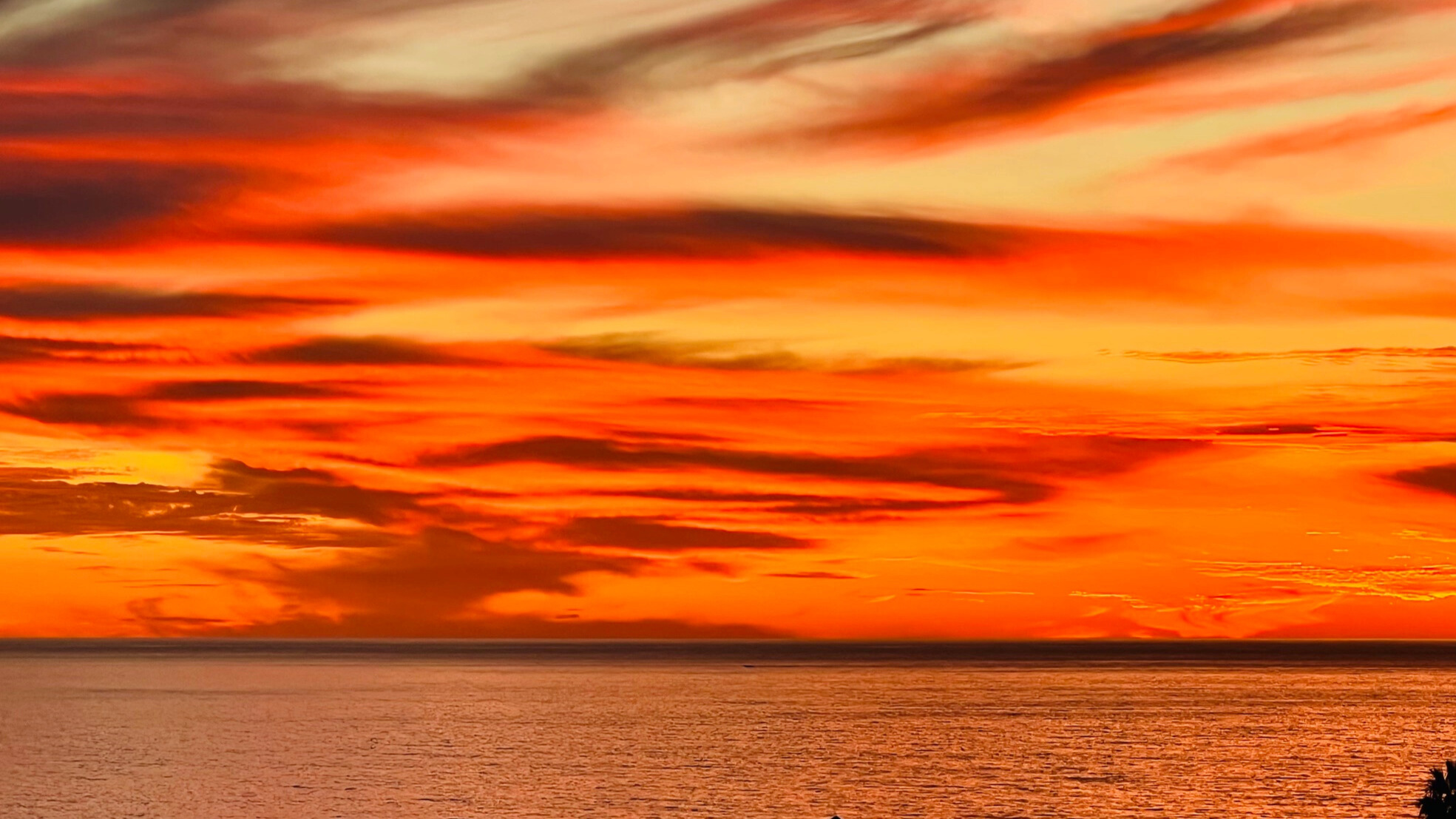
Welcome to La Misión, where every sunset, every wave, every stone tells a story millions of years in the making—and where your own chapter in this ancient tale is just beginning.