
When Earth Built Paradise: The Geological Story of La Misión
Standing on Playa La Misión with your toes in the sand, it’s easy to think you’re just looking at a pretty beach. But beneath your feet is one of the most incredible geological stories in North America. The landscape of La Misión is a 100-million-year-old masterpiece created by volcanic eruptions, massive tectonic collisions, and the Earth literally tearing itself apart.
The Age of Dinosaurs: Building the Foundation
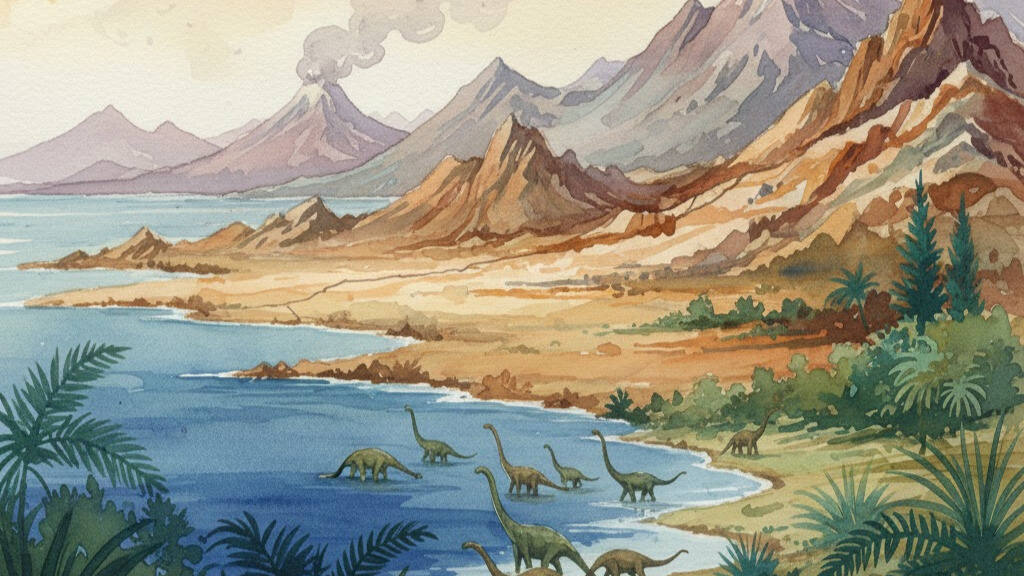
Our story starts about 100 million years ago when dinosaurs still roamed the earth. At that time, an oceanic plate was sliding deep beneath the North American plate. This process, called subduction, created intense heat and pressure. This pressure triggered chains of volcanoes that built the “backbone” of Baja California—the rugged mountains we see on the horizon today.
Volcanic Fire: Shaping the Flat-Topped Mesas
Between 25 and 12 million years ago, a new wave of volcanic activity began. Thick layers of lava flowed across the land and hardened into a protective cap. Over millions of years, wind and rain washed away the softer surrounding dirt, but the hard volcanic rock stayed behind. This created the famous flat-topped hills, called mesas, that make our local landscape look so unique.
The Great Rift: When Baja Was Born
About 12 million years ago, the geology changed. The land began to tear away from mainland Mexico in a process called rifting. This giant crack in the Earth eventually filled with water, creating the Gulf of California. Because of this rift, Baja California is actually moving northwest toward Alaska at about two inches per year—roughly the same speed your fingernails grow!
Ancient Treasures: Sea Shells in the Hills
If you hike the hills east of the beach, you might find something surprising: sea shells and shark teeth. These hills were once the bottom of the ocean. Over millions of years, the earth was pushed upward by tectonic forces, lifting the ancient seafloor high into the air. You can also see coastal terraces, which look like giant steps rising from the beach. Each “step” represents where the sea level sat thousands of years ago.
The River That Carved Paradise
The Río Guadalupe didn’t appear by accident. Over thousands of years, the river acted like a giant saw, cutting through layers of volcanic rock to create the valley we live in today. As it cut the canyon, the river carried “ground-up mountains”—rich minerals and silt—down to the valley floor. This fertile soil is the reason agriculture thrives here and why humans have been drawn to this spot for millennia.
A Landscape Still in Motion
The story of La Misión isn’t over. The forces that built this place are still active today. Earthquakes occur because the peninsula is still on its journey north. The waves are constantly carving new cliffs, and the river continues to carry the mountains to the sea, one grain of sand at a time. We are just temporary guests on a landscape that is constantly evolving.
Why It Matters
Understanding geology changes how you see a simple morning walk. That dark, jagged rock on the hillside? That’s ancient lava. That spiral-shaped fossil you found? That’s a creature that lived when this land was underwater. We live in a place built by fire, water, and deep time, reminding us to respect the powerful forces that continue to shape our home.